The CIA Astral Projection Report: What the Gateway Document Actually Says and What Was on the Missing Page 25
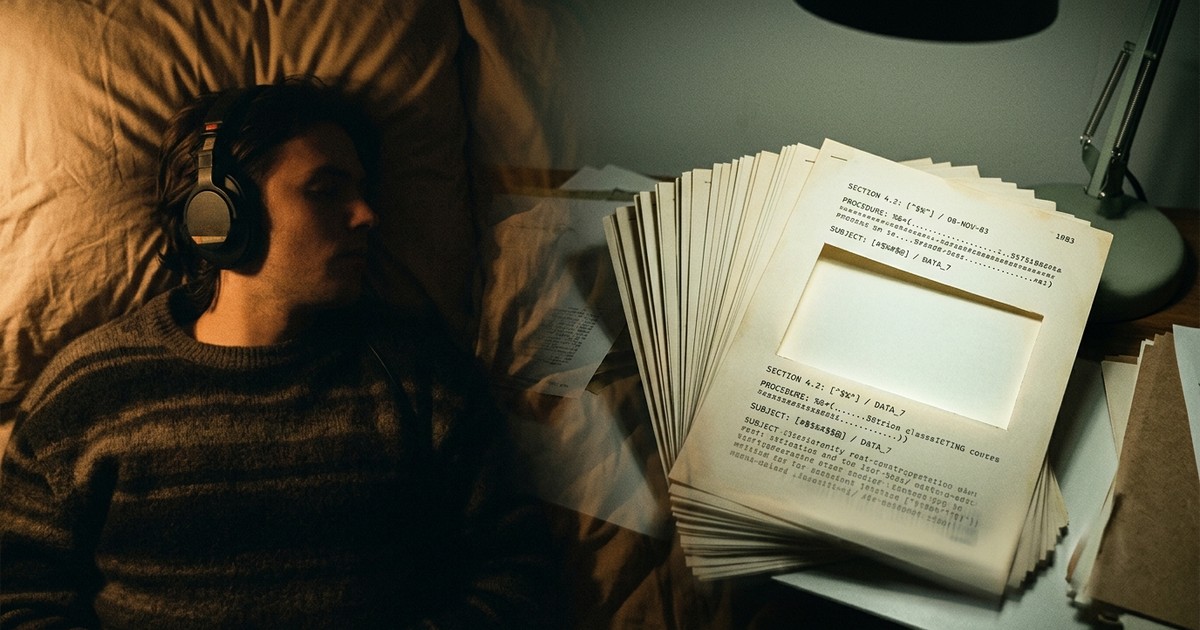
The internet calls it the declassified CIA manual for astral projection. Usually, when I check a story like this, the primary source either does not exist or says something else entirely. This one is different: the document exists, it sits in an open archive, and you can read all 29 pages of it — declassified on 10 September 2003. I read it. What it says is not what the headline promises, and the real story, including the story of a page that was missing for eighteen years, is more interesting than the myth.
It is an Army officer’s memo, not a CIA finding
The first thing you see is the wrong letterhead. The top of page one reads DEPARTMENT OF THE ARMY, and below it: US Army Operational Group, US Army Intelligence and Security Command, Fort George G. Meade, Maryland. The date is 9 June 1983. The subject line: Analysis and Assessment of Gateway Process. The addressee is the Commander, US Army Operational Group. The signature block at the bottom: WAYNE M. McDONNELL, LTC, MI, Commander, Det O — a lieutenant colonel of military intelligence.
The text opens with “You tasked me to provide an assessment of the Gateway Experience in terms of its mechanics and ultimate practicality.” This is not the position of the intelligence community and not a CIA conclusion. It is one officer’s report on an assignment, which later ended up in the agency’s archive and was declassified along with it. The distinction matters, and it is exactly the distinction erased by the retelling that makes the document famous.
What it assesses is a commercial audio course
The second thing the retelling drops is the subject of the assessment. The Gateway Experience is a programme of the Monroe Institute in Faber, Virginia: a set of audio tapes built on a proprietary technique called Hemi-Sync. McDonnell describes it plainly as “the Monroe Institute technique for achieving altered states of consciousness (the Gateway Experience) involving brain hemisphere synchronization or Hemi-Sync.” The phrase “binaural beats” never appears in the document. What appears is Hemi-Sync, a trade name.
The author took the course himself — he refers to “a physician who took the Gateway training with me.” And the closing paragraph explains why any of this was written: he hopes the study will be “a useful guide for other USAINSCOM personnel who are required to take the Gateway training or work with Gateway materials.” In plain terms: officers were being sent on this course, and somebody needed an explanation of how it worked.
What it actually says about leaving the body
The mechanics of the early stages are described in a way anyone who has tried to enter a lucid dream directly from falling asleep will recognise. Additional “pink and white noise” enters the sound stream, and this is “designed to put the physical body at the virtual threshold of sleep as well as to calm the left hemisphere of the mind while raising the right hemisphere to a state of heightened attentiveness.” Body at the threshold of sleep, attention still awake.
The most concrete part is the ending, where McDonnell proposes an accelerated twelve-step scheme. Step E: “repeat steps A and B following use of the autohypnotic suggestion that an out-of-body movement will occur and be remembered.” Step F: “achieve facility in gaining out-of-body state under conscious control.” After that come steps about Focus 15 and Focus 21, escaping time-space, and advice to “be intellectually prepared to react to possible encounters with intelligent, non-corporal energy forms.” These are no longer a description of the course. They are his own proposals to his commander, and they should be read that way.
Two caveats the document makes about itself
They are worth quoting, because they contradict the way the document is sold. First: “Monroe Institute stresses that the Gateway program was not established solely for the purpose of enabling participants to obtain the out-of-body state nor does the program guarantee that most participants will succeed in doing it during the course of the training at the Institute.” Second: “Only one tape out of the many which make up the Gateway Experience is devoted to the techniques involved in the out-of-body movement.” One tape among many, with no guarantee of a result. And where the author states that most if not all people go out-of-body during REM sleep, he inserts the word “reputedly.” He marks it himself as someone else’s claim rather than a fact.
The page that was missing for eighteen years
Here is where the legend starts. Page 25 is absent from the released scan. You do not have to take anyone’s word for it — the text shows it. Page 24 breaks off mid-sentence, on “and the eternal thought or concept of self which results from this self-consciousness serves the,” and the next page opens with a new section, “37. Motivational Aspect.” There is a hole between them, and it falls in the middle of a passage about the Absolute.
For eighteen years that gap was the main argument of everyone who believed the important part had been withheld. What the agency said in response to requests for the page is something I did not verify against primary sources, so I will state only what is checkable: it is not in the published scan, and the break lines up mid-sentence.
Where it turned up, and what is on it
It did not turn up in the agency’s archive. On 14 April 2021 the page was published by the Monroe Institute’s own archive, as a separate file, tagged page 25.
Authenticity checks in a single move: the page completes the broken sentence word for word. Page 24 ends on “serves the,” and page 25 begins “Absolute as the model around which the evolution of time-space revolves to ultimately attain a reflection of and union with Him.” The seam closes.
So what is on it? Nothing secret. The end of a passage arguing that the torus as a figure of the universe appears in the mystical traditions of antiquity everywhere. Section 35, “Left Brain Limitations.” Section 36, “Self Knowledge,” built on the ancient maxim “Know thyself.” And the last sentence on the page, the one that made it worth finding: Gateway may provide “a portal through which, based on months if not years of practice, the individual may pass in his search to find self, personal effectuality, and truth in the larger sense.”
Eighteen years of conspiracy theory over a paragraph that says: this takes long practice.
What the document does not prove
Look at its bibliography. It fills the last page and runs to nine items. The basis of the physical model is Itzhak Bentov’s “Stalking the Wild Pendulum” from 1977, a popular science book. Alongside it sit an article from Science Digest of June 1983 and “Altered States of Consciousness” from The Mother Earth News, March/April 1983 — a magazine about homesteading and country living. This is not the bibliography of a scientific paper. It is a conscientious survey assembled by one officer, in the time he had, from what was at hand.
And one more thing the retellings leave out. 1983 is the year the psychic research programme at that same command and that same base, Fort Meade, was redesignated CENTER LANE. It survived another twelve years as SUN STREAK and then STAR GATE, and in 1995 it was evaluated from the outside: the American Institutes for Research report “An Evaluation of Remote Viewing: Research and Applications,” dated 29 September 1995. The assessments inside it disagreed — the statistician Jessica Utts found the laboratory effect statistically significant, the psychologist Ray Hyman found the methodology unreliable — but on the practical question they converged: whatever was produced was too vague to be useful. The programme was shut down. The agency whose archive made this document famous is the same agency that closed its own programme on the subject.
What survives all of that
Strip out Bentov’s physics and the proposals about non-corporeal energy forms, and what remains in the memo is a description of a method — a recognisable one.
First: the body is brought to the threshold of sleep while attention is kept awake. That is what is now called the direct entry into a lucid dream, WILD. Second: before sleep, a suggestion is set that the experience “will occur and be remembered.” An intention to remember, set before sleep, is MILD — and unlike everything else in this document, it has published research behind it. Third: the window is REM sleep, and the author builds his scheme on it. The side effect of that same window is bodily immobility, which a conscious person can run into; I have written separately about the risks.
On this point the 1983 memo and a modern lucid dreaming protocol are saying the same thing in different words.
Let us be plain
I do not train leaving the body as travel to somewhere. I have no evidence that consciousness departs the body, and this document has none either — what it has is a model built by one man out of a popular science book from 1977. I treated Mark Twain’s mental telegraphy the same way: what is interesting is not the mystical half but the reproducible one.
What genuinely trains is different and checkable: staying conscious at the threshold of sleep, holding attention inside the dream, and remembering what happened. The sensation of separating from the body is common in that state, it is well described, and it requires no mysticism at all. The difference between “I experienced leaving my body” and “my consciousness was outside my body” is worth keeping in mind: the first is an experience, the second is a claim about the world. McDonnell’s memo is more honest than its reputation — its own verdict is not “we have learned how,” but “months if not years of practice.”
How to check this yourself
The document sits in the CIA reading room under the identifier CIA-RDP96-00788R001700210016-5, declassified on 10 September 2003, and mirrors with a recognised text layer make it easy to search for the quotations. The separate file of page 25 was published by the Monroe Institute archive in April 2021, and a complete 30-page assembly, with the missing page restored to its place, is on Wikimedia Commons. All of it is open and free. That is the best thing about this story: a contested claim can be checked by hand instead of retold.
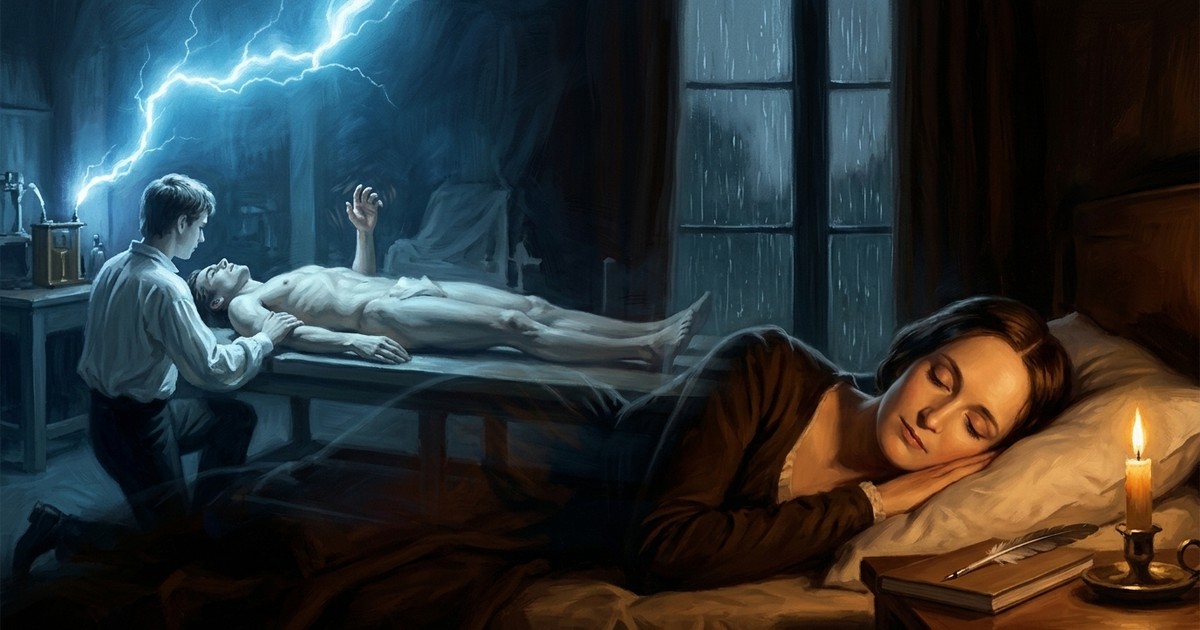
Mary Shelley Dreamed Frankenstein — Except She Wrote That She Was Not Asleep
Mary Shelley described that night herself: “I did not sleep, nor could I be said to think.” Not a dream but the threshold of sleep — and before it came days of deliberate work on an assigned problem, a late-night conversation about the principle of life, and years of a trained childhood habit of “waking dreams”. Here is the primary source, the 1831 introduction, together with where it is weak.
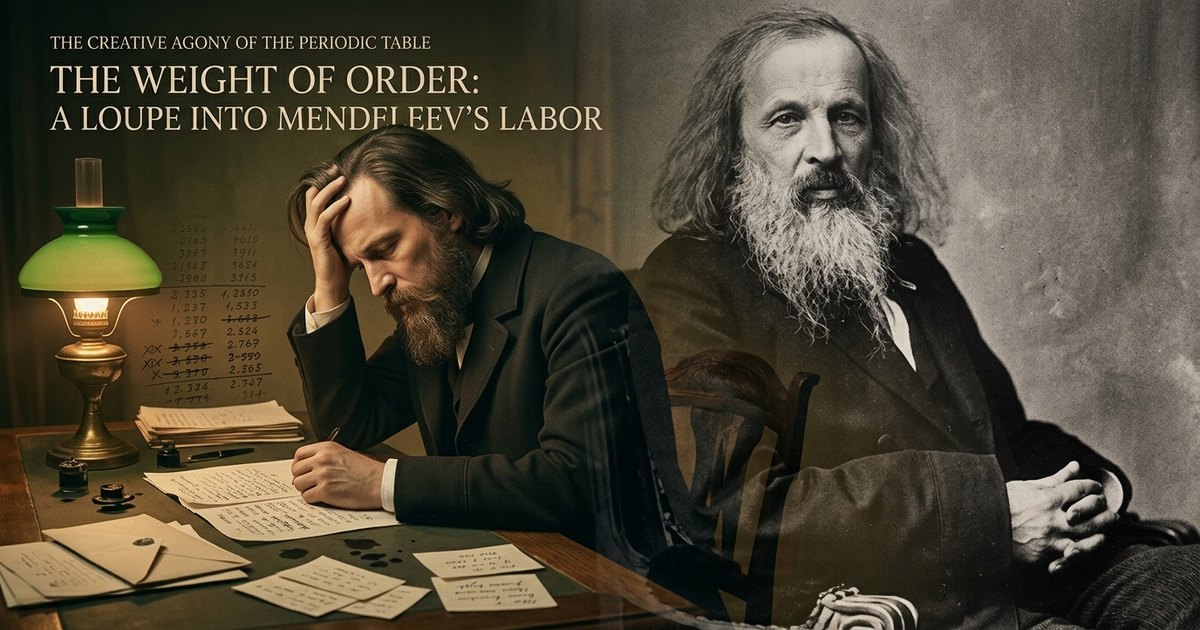
“Mendeleev Saw the Table in a Dream”: The Story Has a Single Source, and It Is Not Mendeleev
The dream story was told not by Mendeleev but by the geologist Alexander Inostrantsev, and printed only after Mendeleev’s death. Mendeleev’s own recorded answer was irritable: “I have thought about it for maybe twenty years.” What the archival drafts of 17 February 1869 show, why the dream myth does more harm than it looks — and what really can be trained at the threshold of sleep.