Risks of lucid dreaming: paralysis and false awakenings

Lucid dreaming is presented in popular literature as a safe and universal practice. Statistically this is close to the truth: in a healthy nervous system regular lucidity has no measurable negative outcomes. But 'healthy nervous system' is not a universal condition. There are categories of people for whom the practice is contraindicated, and there are techniques whose cost outweighs the benefit even for the healthy.
Sleep paralysis. The most common side effect of aggressive techniques, particularly WILD. The cortex wakes up while the brainstem continues to block motor neurons (natural REM atony). The person finds themselves 'locked' inside a paralysed body, often with hypnopompic hallucinations: a sense of presence in the room, pressure on the chest, choking. Evolutionarily the amygdala interprets this as a lethal threat — producing uncontrollable panic.
Exiting paralysis. Trained practitioners focus will onto a single peripheral muscle (a finger of the hand or foot), gradually expanding control. The signal to the motor cortex wakes the body in 20–60 seconds. Without training the first episode is usually difficult — which is the rule: graduate to WILD only after a confident 10+ lucid dreams via MILD, when the nervous system is familiar with the transition.
False awakenings. A series of episodes in which the dreamer 'wakes,' gets up, starts a morning routine — and minutes later notices an anomaly (a switch that doesn't work, distorted text, shifted geometry). Realises they are still dreaming. Wakes again. And again. Cycles of 5–10 false awakenings in a single night produce significant disorientation and erode trust in everyday perception for 1–2 days.
Physiological cost of WBTB. Interrupting sleep in the middle of the night fragments circadian rhythms. Chronic use means deprivation of slow-wave sleep, cumulative fatigue, weakened immunity, risk of clinical insomnia. WBTB is not designed for daily use; in my practice — twice a week maximum, in 3–4-week cycles with breaks.
Psychopathological risks. Artificial induction of lucidity is associated with elevated risk of dissociation, exacerbation of obsessive-compulsive disorders, and schizophrenia-spectrum states in predisposed individuals. Anyone with a history of psychosis, severe dissociation, untreated depression or active PTSD does not begin the practice. Anyone with a family history of schizophrenia begins the conversation with a psychiatrist.
Cognitive 'chill.' In a fraction of people, after several months of intensive practice, a temporary feeling of 'unreality' of daytime life appears — depersonalisation. It is a rare side effect, usually resolving when practice frequency is reduced and sleep regime normalises. If the symptom persists beyond two weeks — see a clinician.
Ethics and lucidity as medicine. The method has documented therapeutic effect on PTSD and chronic nightmares, but that does not make it a universal antidepressant. Attempting to solve depression, bipolar disorder or generalised anxiety with lucid dreams is usually ineffective and may delay timely clinical treatment.
Who I accept into the practice. Adults, with no history of psychosis, severe dissociation, untreated depression or active post-traumatic disorder. Willing to maintain a sleep regime, keep a journal, and not abuse aggressive techniques. Those I decline I refer to specialists — that is part of responsible work.
FAQ
- Is lucid dreaming dangerous?
- For a healthy person practising in moderation, no. The main risks come not from the phenomenon itself but from aggressive techniques and sleep deprivation.
- Who should avoid lucid dreaming?
- People with anxiety disorders, panic attacks, fearful sleep-paralysis episodes, or unstable sleep. They should enter the practice gently, without forced techniques.
- Can you get stuck in a lucid dream?
- No. Getting 'stuck' is impossible: a dream is bounded by the length of the REM phase, and you wake when it ends regardless.
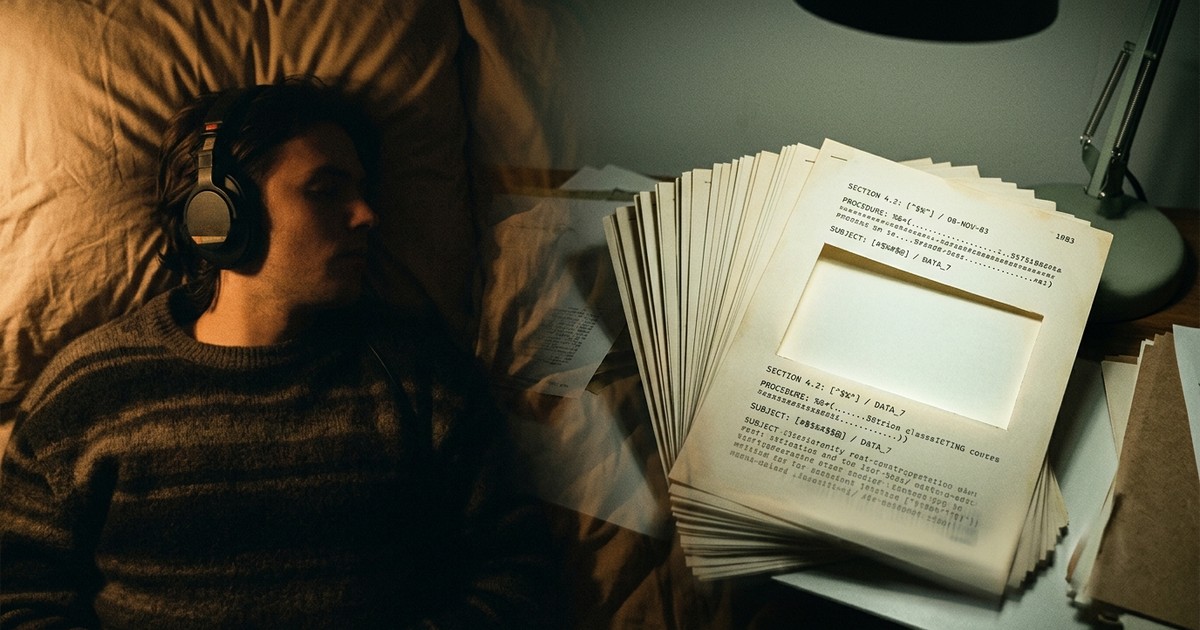
The CIA Astral Projection Report: What the Gateway Document Actually Says and What Was on the Missing Page 25
The document is real and you can download it: 29 pages, dated 9 June 1983, signed by Lieutenant Colonel Wayne McDonnell. It is not a CIA report and not a manual for astral projection — it is an Army memo assessing a commercial audio course. Here is the primary source: what it says about leaving the body, why one page was missing for eighteen years, and what turned out to be on it.
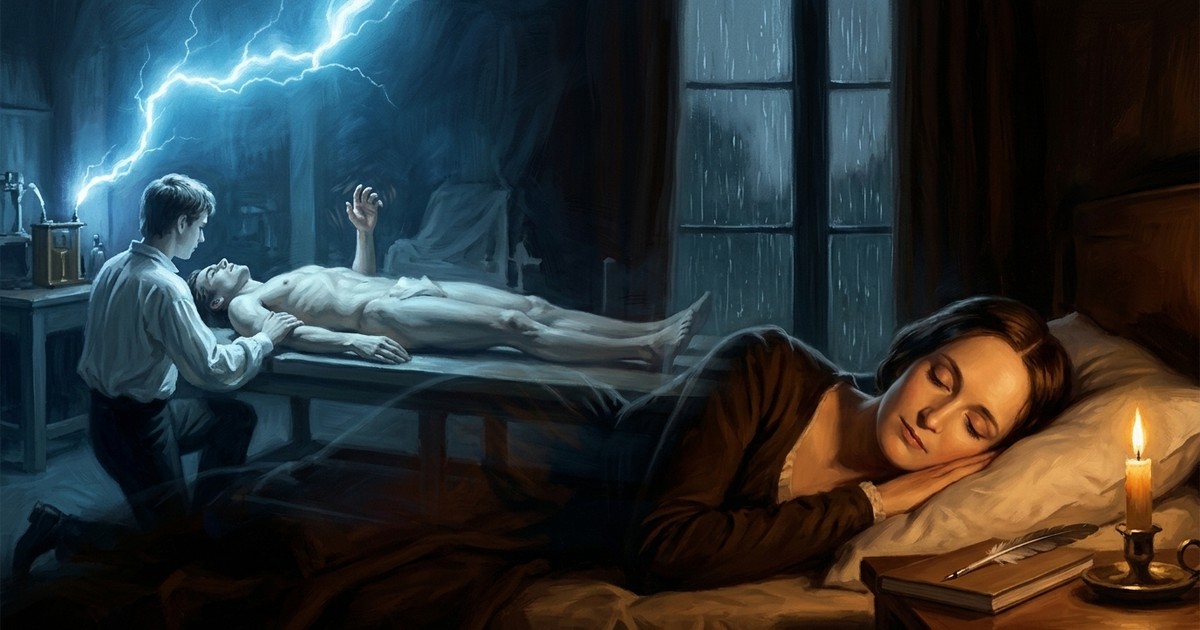
Mary Shelley Dreamed Frankenstein — Except She Wrote That She Was Not Asleep
Mary Shelley described that night herself: “I did not sleep, nor could I be said to think.” Not a dream but the threshold of sleep — and before it came days of deliberate work on an assigned problem, a late-night conversation about the principle of life, and years of a trained childhood habit of “waking dreams”. Here is the primary source, the 1831 introduction, together with where it is weak.