Blog
Field notes from a practitioner on lucid dreaming, sleep neuroscience, and integrating dream experience into daytime life.
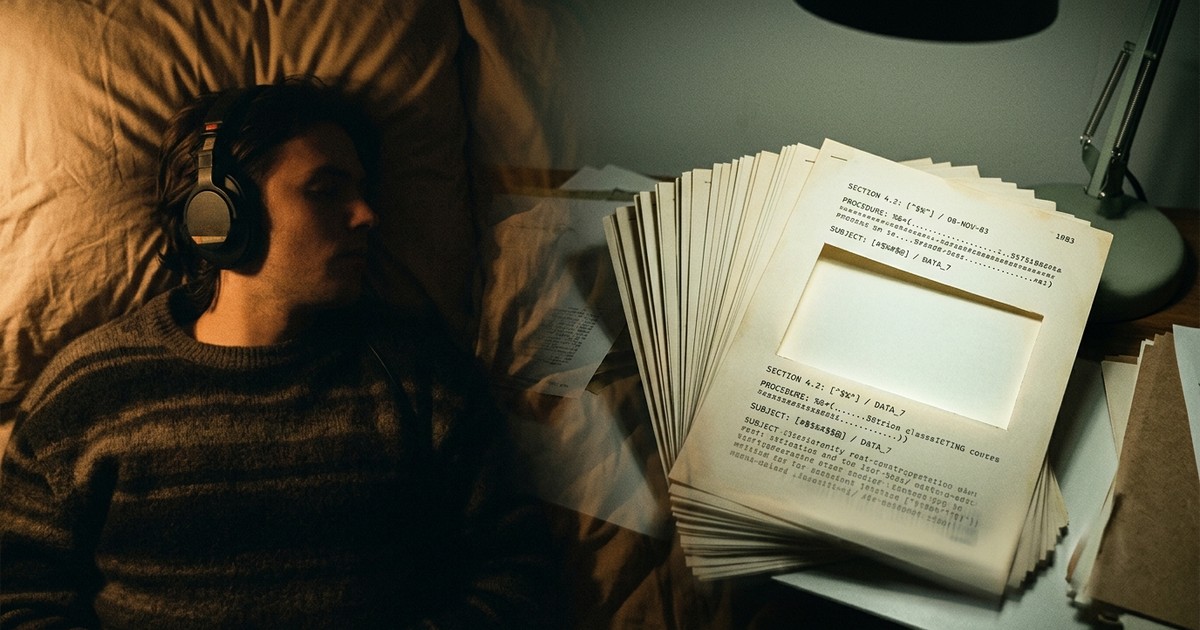
The CIA Astral Projection Report: What the Gateway Document Actually Says and What Was on the Missing Page 25
The document is real and you can download it: 29 pages, dated 9 June 1983, signed by Lieutenant Colonel Wayne McDonnell. It is not a CIA report and not a manual for astral projection — it is an Army memo assessing a commercial audio course. Here is the primary source: what it says about leaving the body, why one page was missing for eighteen years, and what turned out to be on it.
Read more
Mary Shelley Dreamed Frankenstein — Except She Wrote That She Was Not Asleep
Mary Shelley described that night herself: “I did not sleep, nor could I be said to think.” Not a dream but the threshold of sleep — and before it came days of deliberate work on an assigned problem, a late-night conversation about the principle of life, and years of a trained childhood habit of “waking dreams”. Here is the primary source, the 1831 introduction, together with where it is weak.
Read more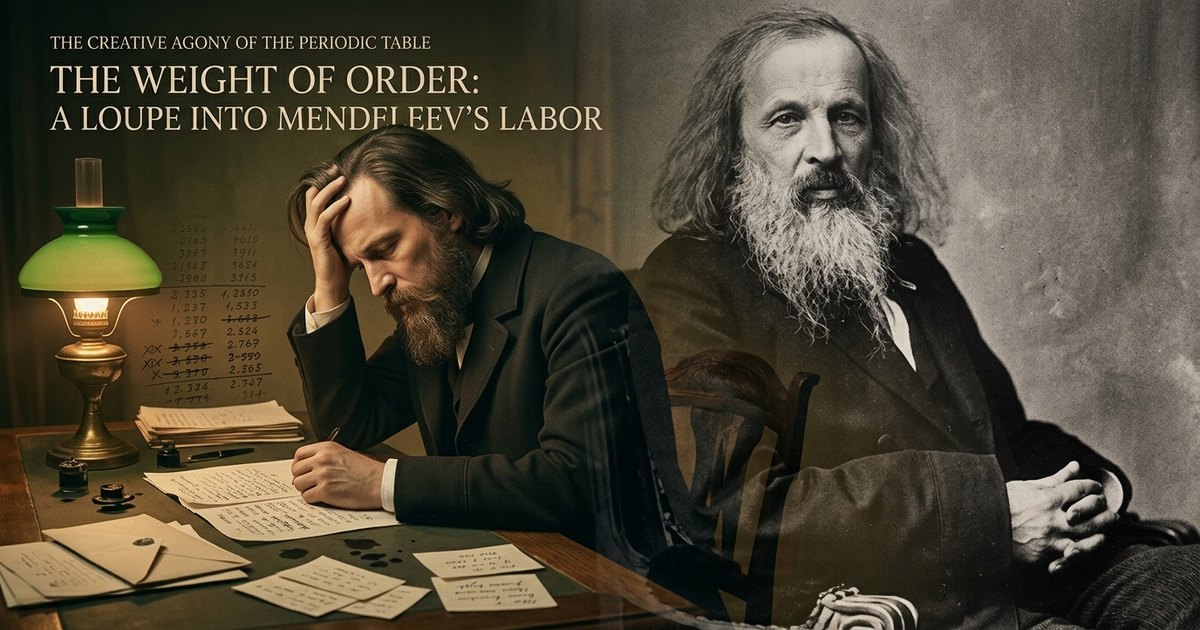
“Mendeleev Saw the Table in a Dream”: The Story Has a Single Source, and It Is Not Mendeleev
The dream story was told not by Mendeleev but by the geologist Alexander Inostrantsev, and printed only after Mendeleev’s death. Mendeleev’s own recorded answer was irritable: “I have thought about it for maybe twenty years.” What the archival drafts of 17 February 1869 show, why the dream myth does more harm than it looks — and what really can be trained at the threshold of sleep.
Read more
Federico Fellini’s “Book of Dreams”: He Drew His Dreams for Thirty Years — and Once Quit for Four
In 1960 the Jungian analyst Ernst Bernhard told Fellini to write his dreams down and draw them. Two volumes came out of it, published only in 2007. What checks out, what Fellini never claimed — and why the four-year gap in his diary is more useful than the myth of iron discipline.
Read more
Mark Twain’s “Mental Telegraphy”: The Essay He Was Too Afraid to Publish for Thirteen Years
Twain coined the term “mental telegraphy” himself: he wrote the essay in 1878 and only printed it in 1891, afraid of ridicule. What checks out against his own texts, why the famous dream about his brother must be read with care — and which part of all this can actually be trained.
Read more
Elizabeth Taylor’s Clinical Death: The Tunnel, and the Words That Sent Her Back
In March 1961 Elizabeth Taylor was dying of pneumonia in London — “four times I was called dead.” She kept quiet for almost thirty years about the tunnel, the white sun and Mike Todd’s “it’s not your time.” It happened against her will — but the door she describes can also be opened on purpose.
Read more
Carl Jung’s Active Imagination: How He Trained Himself to Enter His Own Images
On 12 December 1913 Jung sat down at his desk and deliberately “let himself drop” into his own images — then turned it into a practice he kept up for years. What he actually did step by step, why he wrote it all down, and why his 1944 vision is a different story.
Read more
Sharon Stone Saw the Light: The Near-Death Experience That Rewrote Her Fear of Dying
In 2001 Sharon Stone’s brain bled for nine days and her survival odds were about one percent — and on that edge she felt herself pulled into a bright white light and out of her body. It happened to her against her will, but what she describes is a doorway consciousness can also open on purpose.
Read more
Stephen King’s ‘Creative Sleep’: The Waking Dream He Trained Himself to Enter
Stephen King doesn’t wait for inspiration — he built a fixed ritual to drop into a dream-like state on command and calls it ‘creative sleep.’ What he actually does, why it works, and how to train the same threshold on purpose.
Read more
Guillermo del Toro’s Lucid Dreams: The Childhood Nightmares That Became Pan’s Labyrinth
The director of Pan’s Labyrinth didn’t train lucid dreaming — it broke into his childhood uninvited, a recurring nightmare until he was eleven. What happened to him, why it works, and how to enter that same state on purpose and safely.
Read more
Stephen LaBerge Proved Lucid Dreams in the Lab — and Built the MILD Technique
Stanford psychophysiologist Stephen LaBerge signalled out of a dream with his eyes and turned lucid dreaming from mysticism into a measurable scientific fact. What he did, why it works, and how to learn it.
Read more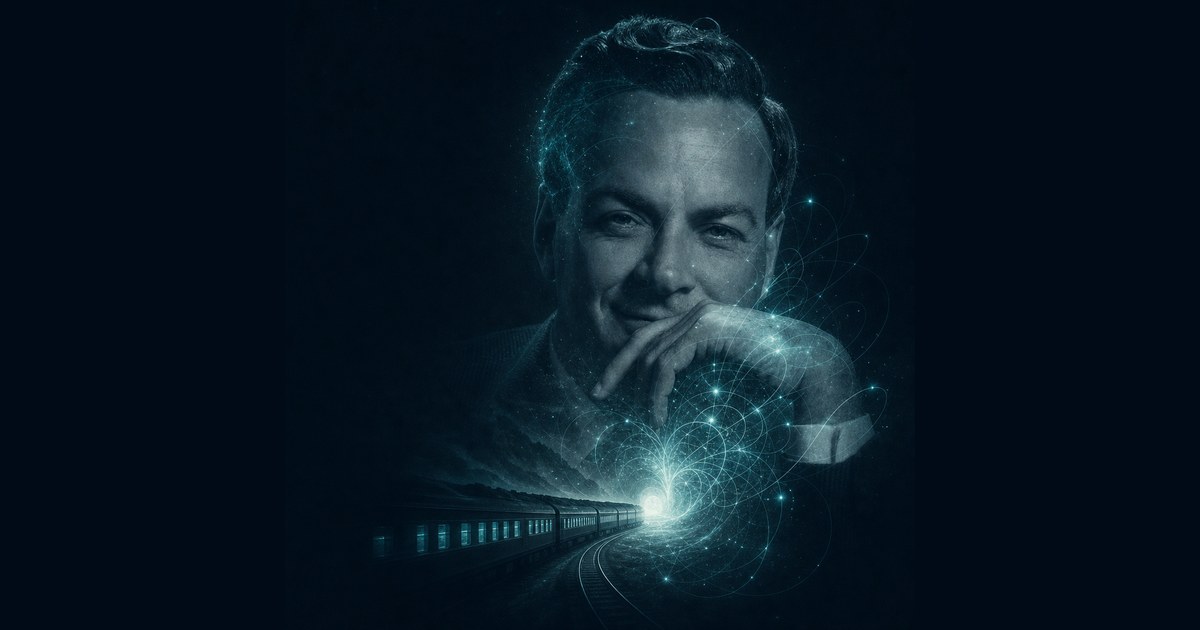
Richard Feynman’s Lucid Dreams: The Experiments a Nobel Physicist Ran Inside His Own Sleep
The Nobel physicist didn’t read books on lucid dreaming — he trained it himself by watching how he fell asleep, and ran experiments on perception inside the dream. What he did, why it works, and how to learn it.
Read more
Salvador Dalí Caught Images at the Threshold of Sleep: The ‘Slumber With a Key’ Technique
The surrealist didn’t invent his visions — he deliberately caught them in hypnagogia, on the border between waking and sleep, using a key and a plate. What he did, why it works, and how to learn it.
Read more
Christopher Nolan’s Lucid Dreams: The Practice Behind “Inception”
The director of “Inception” didn’t invent lucid dreaming — he practised it himself from his teens. What he actually did, why it works, and how to learn it.
Read more
Lucid vs vivid vs nightmare dreams: the difference
Three states are often confused. How lucid differs from vivid, and vivid from nightmare. What EEG and Stumbrys & Erlacher surveys actually show.
Read more
Sleep hygiene for lucid dreaming: 10 rules
The best induction technique is useless on top of broken sleep. AASM baseline hygiene rules and what gets added specifically for lucidity.
Read more
Dream incubation: seeding a question into sleep
Deirdre Barrett (Harvard) showed targeted pre-sleep seeding shifts REM content. A 5-step protocol for problem-incubation in dreams.
Read more
How to stay lucid: in-dream stabilization techniques
Most first lucid dreams collapse within 30 seconds from sheer euphoria. Concrete stabilization techniques: hands, spinning, voice.
Read more
SSILD: induction through sense-cycling at the threshold
A method invented on practitioner forums, not in the lab. Cycles of attention through sight, sound, touch before sleep. Who it suits and where the limits are.
Read more
A third state of consciousness: what the largest EEG study shows
Radboud University analysed the largest polysomnography dataset on record: lucid dreaming is a separate brain state, not sleep, not waking.
Read more
Lucid dreaming for senior leaders
Concrete applications I observe in my work with C-suite executives and company founders.
Read more
Galantamine and +42% lucid dreams: a clinical-trial breakdown
Placebo-controlled trial of 121 patients with Stephen LaBerge. What acetylcholine showed — and why it's not a reason to head to the pharmacy.
Read more
Alpha, beta, gamma: brain waves during a lucid dream
Beta, alpha and the burst of gamma in the prefrontal cortex — what the EEG shows the instant a dreamer realises they are asleep. No jargon, with the measurements.
Read more
The dream journal: invisible foundation
No technique works without it. How to keep the journal so that it produces results instead of becoming a chore.
Read more
Lucid Dreaming Therapy for PTSD: the resignification method
Lucid Dreaming Treatment (LDT) is a non-pharmacological intervention with documented effect on chronic nightmares. How it works and where its limits lie.
Read more
WILD: entering lucidity directly
A more advanced technique — the transition into a lucid dream without losing consciousness. When to use it, and what to be careful about.
Read more
Mental rehearsal in lucid dreams: training without moving
Schädlich and Erlacher (2018): rehearsing movement in a lucid dream measurably improves technique in waking life. Why this works and who already uses it.
Read more
Vitamin B6 and dream recall: what the experiment showed
A direct relationship between B6 intake and the detail of morning dream memory. A small but reproducible study that changed how I prepare clients for practice.
Read more
MILD: Mnemonic Induction of Lucid Dreams
The most reliable technique for busy people. What MILD is and why it is the recommended starting point.
Read more
Reality testing: the daytime habit that unlocks lucid nights
The simplest and most underrated cognitive method. A few short checks a day that become a reflex — and a flash of lucidity inside a dream.
Read more
WBTB: the wake-back-to-bed method in 4 steps
A chronobiological technique that doubles the effectiveness of MILD and WILD. Why you wake yourself in the middle of the night, and why not every night.
Read more
What lucid dreaming actually is
A short introduction for people who have heard of the phenomenon but are unsure why it should matter to them.
Read more
Dream signs: how to find your personal dream signals in 30 days
The most underrated stage of the practice. Without personal dream signs MILD plays like a lottery. With them — like a trainable skill.
Read more
Risks of lucid dreaming: paralysis and false awakenings
Safety is discussed less than effectiveness. What to watch for and who should not attempt the practice.
Read more