Elizabeth Taylor’s Clinical Death: The Tunnel, and the Words That Sent Her Back

In March 1961 Elizabeth Taylor was dying of pneumonia in a London hospital. One news agency went ahead and reported that she was dead. She survived, collected her first Academy Award a month later — and then said nothing for almost thirty years about what she saw while they were pulling her back. When she finally told it, the account was strikingly concrete. It is worth going through honestly.
What happened in London
In March 1961, while Cleopatra was in production in England, Taylor developed nearly fatal pneumonia and needed an emergency tracheotomy. She described those days without metaphors: “Actually four times I was called dead, and stopped breathing. They had pipes going into my lungs, pulling the gook out and shoving oxygen in.” On 17 April 1961, a month after the surgery, she was handed the Oscar for BUtterfield 8 — and never believed in it: “BUtterfield 8 was my fourth nomination in a row, and I won the award for my tracheotomy.” The world had effectively buried her and decorated her in the same month.
What she saw
She only told the story publicly in 1992, on The Oprah Winfrey Show, in an episode marking her sixtieth birthday. “I sort of floated into this tunnel, and there were other figures that I recognized. And this welcoming white sun, and warmth. Like being in liquid mercury — being weightless,” she said. There is no fear and no struggle anywhere in that description: recognition, warmth, and the complete loss of the body’s weight.
“No, baby, it’s not your time”
Then comes the central scene. “Mike Todd was there. And I wanted to be with him more than anything in the world. He’d been dead about three years,” she says. Todd, her third husband, was killed in a plane crash in March 1958 — the arithmetic in her account checks out exactly. She was not allowed to stay. “He said, ‘No, baby, you can’t. It’s not your time. You can’t come over. You have to fight to go back.’” And that is the detail that makes this account unusual: she was not released back, she was sent back and told to fight.
Why she kept quiet for thirty years
Taylor said nothing about it for decades because she was afraid people would think she was crazy — a woman used to every kind of attention kept precisely this to herself. Her own wording: “Just because I haven’t talked about it doesn’t mean that it wasn’t as real as the day it happened.”
Let us be plain: this was not a practice
All of it happened to Taylor against her will, on the back of a physical catastrophe — pneumonia, oxygen starvation, pipes in her lungs. It was not a trained skill, and pretending otherwise would be dishonest: states like this are not worth hunting, and certainly not worth paying for with your health. But the features she lists are familiar far outside an intensive-care unit — and those can be trained.
The same door, opened on purpose
Separation from the body, weightlessness, a clear mind while the body is switched off — that is what people meet at the threshold of sleep. It is also where the sensation of leaving the body lives, the one that frightens people during sleep paralysis: the body is already offline, awareness is not. That threshold is trained as lucid dreaming, and the direct route into it from waking is the WILD technique. Start with the basics: a dream journal, reality checks by day, MILD before sleep. Once inside, a separate skill takes over — holding the state. And there is no mysticism about it: the threshold has well-described neurophysiology, and the practice itself has limits and safety rules.
How to walk this path with guidance
Taylor saw that door once, by accident, and nearly paid for the viewing with her life. It can be opened differently — calmly, step by step, with no risk and no intensive care. If you want to walk this path with guidance, explore my method and apply.
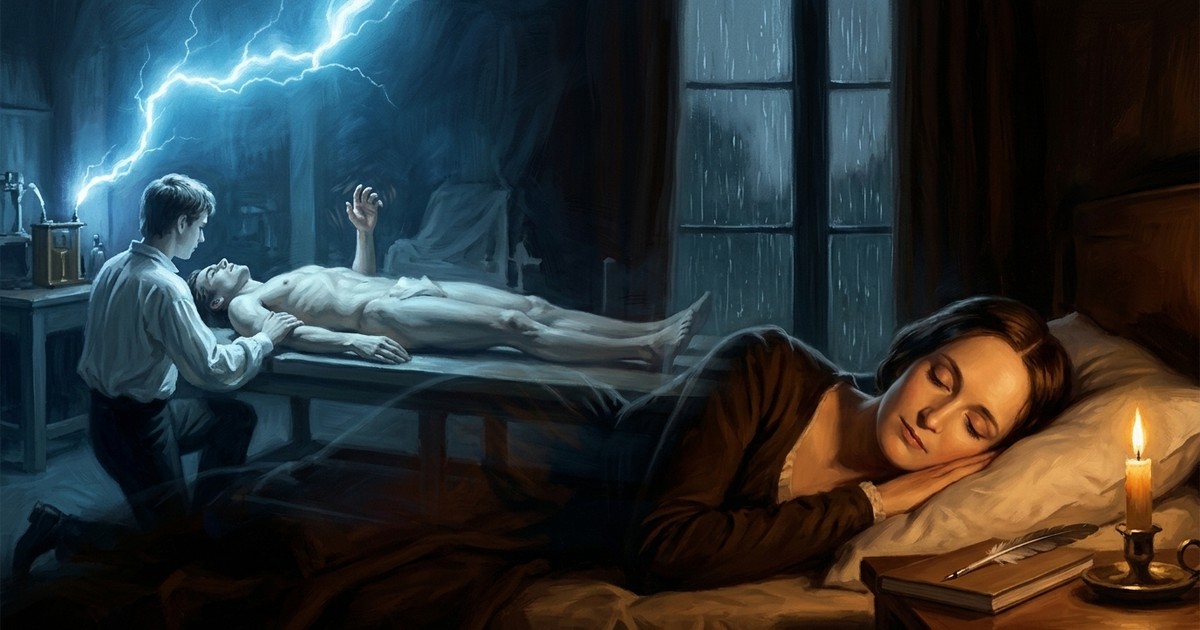
Mary Shelley Dreamed Frankenstein — Except She Wrote That She Was Not Asleep
Mary Shelley described that night herself: “I did not sleep, nor could I be said to think.” Not a dream but the threshold of sleep — and before it came days of deliberate work on an assigned problem, a late-night conversation about the principle of life, and years of a trained childhood habit of “waking dreams”. Here is the primary source, the 1831 introduction, together with where it is weak.
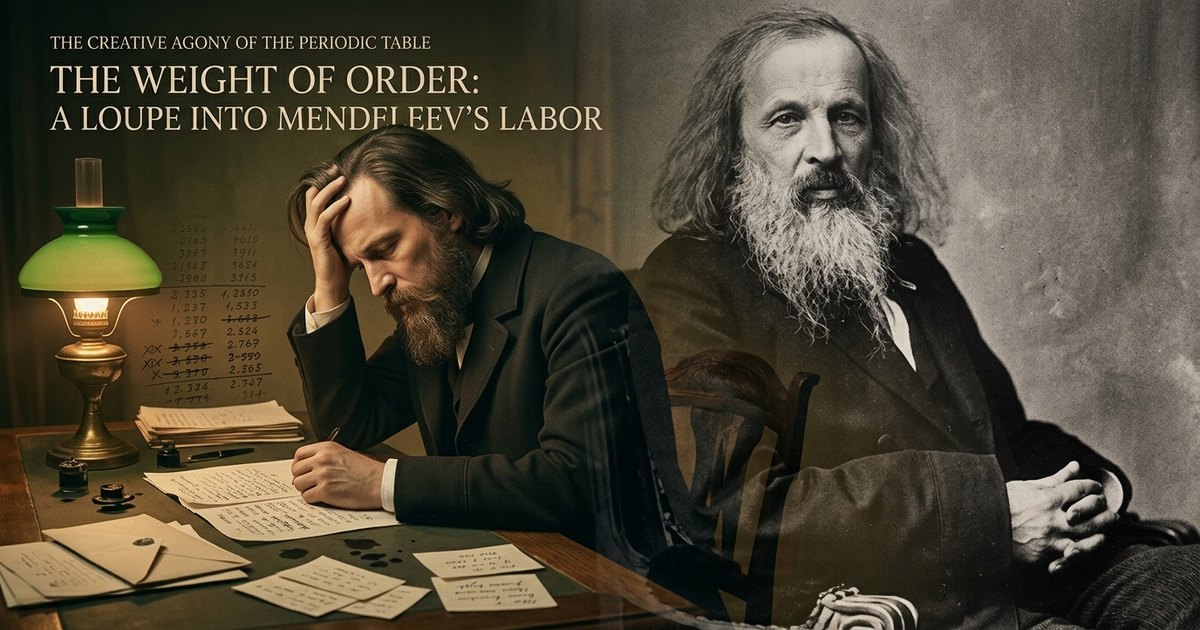
“Mendeleev Saw the Table in a Dream”: The Story Has a Single Source, and It Is Not Mendeleev
The dream story was told not by Mendeleev but by the geologist Alexander Inostrantsev, and printed only after Mendeleev’s death. Mendeleev’s own recorded answer was irritable: “I have thought about it for maybe twenty years.” What the archival drafts of 17 February 1869 show, why the dream myth does more harm than it looks — and what really can be trained at the threshold of sleep.