Field notes
Sharon Stone Saw the Light: The Near-Death Experience That Rewrote Her Fear of Dying
Stone describes an experience during a serious medical crisis. Her account is not evidence that dream techniques can safely reproduce it.
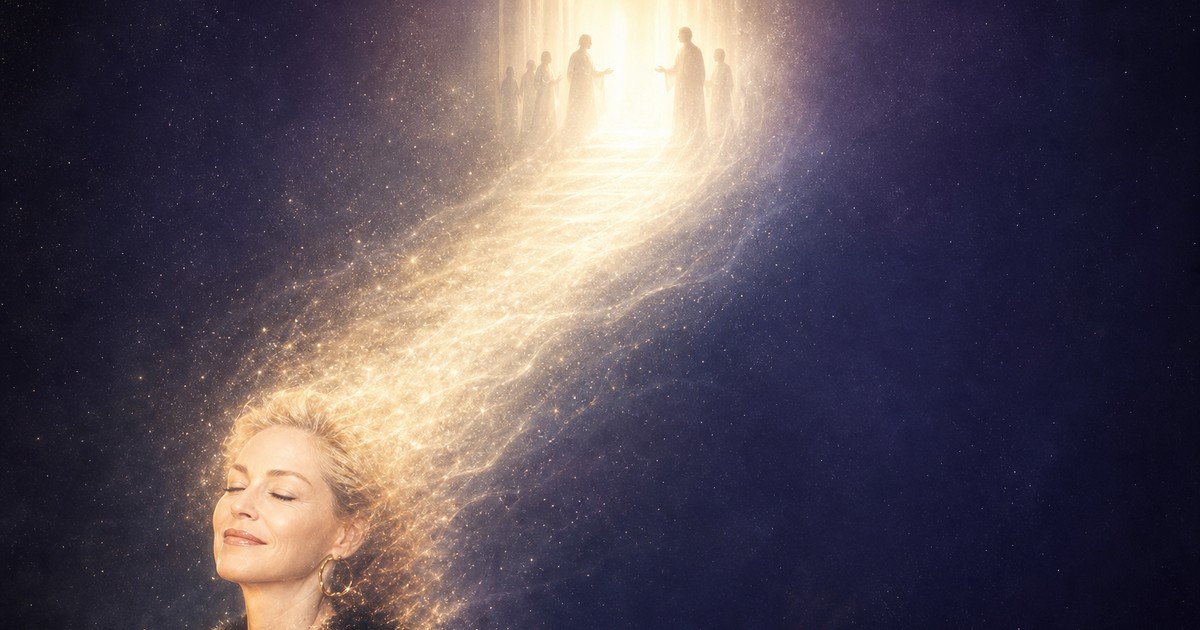
Sharon Stone suffered a serious stroke in 2001. Her later accounts associate that crisis with an unusual experience of light and the presence of loved ones who had died. A survival story is not an instruction for inducing the same state.
Access her own account
Her memoir The Beauty of Living Twice, publisher page with sample access discusses illness and a long recovery. The CNN conversation with Anderson Cooper, 25 June 2026 gives access to Stone's own voice.
Limits of testimony
A report of light is evidence of an experience, not a clinical record of cardiac arrest. A survival percentage, exact vessel, bleeding duration or speculation about defibrillation cannot be treated as a verified medical picture without documentation. I do not have her medical records.
Similarity does not prove identical physiology
Weightlessness and separation can also occur around sleep. Similar words do not establish that stroke, near-death experience, paralysis and lucid dreaming share ‘one door’. Sleep science does not demonstrate a safe way to reproduce a medical crisis.
Not a promised outcome
Personal interpretations of survival cannot show that WILD removes fear of death or treats anxiety. LDT and nightmares are a separate clinical question with limited evidence.
Read this as history, not an argument to buy coaching or induce paralysis. Interest in dreams can begin with a journal, not replaying a crisis. Trauma, persistent sleep problems and distress about death call for qualified support.
Sources and context
- The Beauty of Living Twice, publisher page with sample access
- CNN conversation with Anderson Cooper, 25 June 2026
Links lead to studies, first-person accounts or edition information. The text distinguishes an abstract, secondary quotation or book description from a full original. The author's observations are not clinical evidence or a guarantee; no independent clinical review is claimed.
Keep reading
8 min read
The dream journal: invisible foundation
A simple dream-journal template, an example entry and a weekly review method — without fixed improvement promises or supplement advice.
10 min read
Lucid Dreaming Therapy for PTSD: the resignification method
What a small LDT study in patients with PTSD did and did not find, and why coaching cannot replace clinical care.