Mental rehearsal in lucid dreams: training without moving

Mental rehearsal has been familiar in sport for decades: imagining a movement activates the same sensorimotor pathways as physically performing it. This is called the ideomotor act, and it has been standard in elite-athlete preparation since the 1980s. In 2018 German researchers Daniel Schädlich and Daniel Erlacher asked the next question: what if ideomotor practice happens inside a lucid dream rather than in waking imagination?
The hypothesis. In REM the motor cortex can send full-strength signals to muscles — the signals are blocked only at the brainstem (natural atony). That means synaptic connections strengthen, neural circuits train, but without risk of muscle injury and without metabolic cost of physical movement.
The experiment. A group of athletes and musicians with varying levels of lucid-dream skill rehearsed complex kinaesthetic tasks: gymnastic elements, musical passages, throws. After waking, performance quality was objectively measured. Result — measurable improvement in the dream-trained group compared with controls.
Today this approach is integrated into Olympic-team preparation in Germany, Austria and Switzerland. Surfers use lucid dreams to drill complex manoeuvres, gymnasts to prepare risky elements, musicians for technically demanding passages. In the dream environment there is no fear of falling, no gravity in the usual sense, no fatigue — an ideal repetition zone.
What is critical for effectiveness. The scene must be detailed — texture of the equipment, sense of weight, amplitude of movement. A dream in which a gymnast 'thinks about the element' does not work. A dream in which the gymnast physically feels the body moving through the element does. This skill of holding bodily detail is trained separately — usually around the 10th–20th lucid night.
Clinical prospects. The same mechanism is applicable to stroke rehabilitation, partial paralysis, Parkinson's. Virtual movements inside a lucid dream support the functional state of the motor cortex, slowing its degradation. Several European rehab centres are already piloting protocols.
What this means for non-athletes. Any profession built on fine motor skill — surgeons, musicians, pilots, dancers — can benefit from in-dream ideomotor practice. The condition is one: stable lucidity (at least 2–3 lucid dreams per week) and the ability to hold a scene long enough for several repetitions.
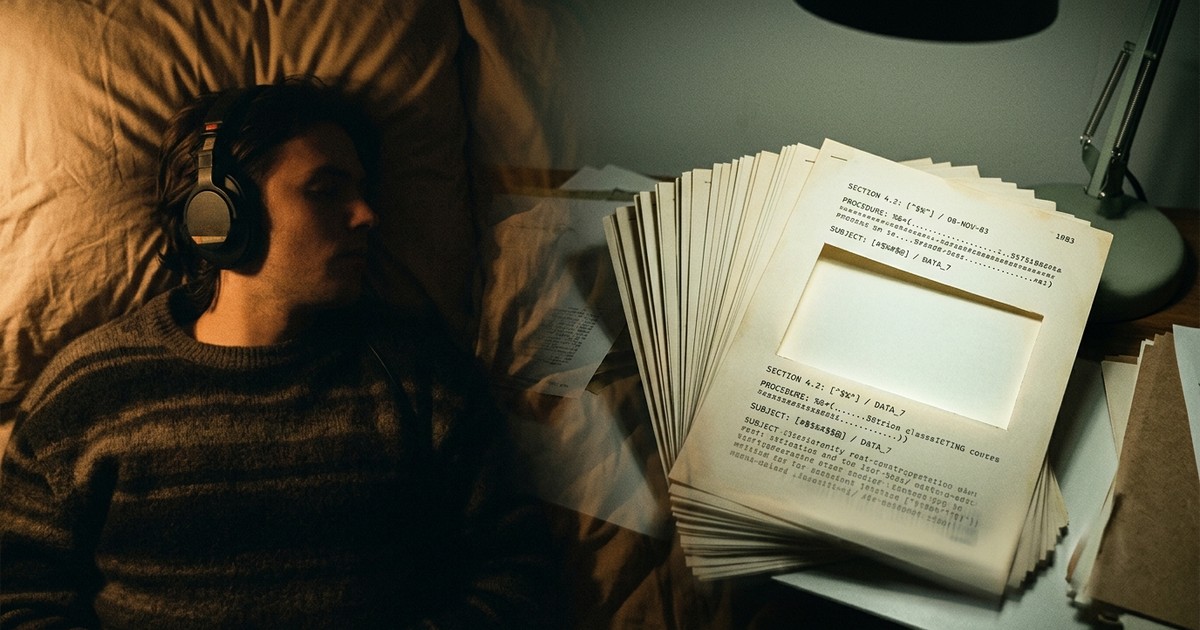
The CIA Astral Projection Report: What the Gateway Document Actually Says and What Was on the Missing Page 25
The document is real and you can download it: 29 pages, dated 9 June 1983, signed by Lieutenant Colonel Wayne McDonnell. It is not a CIA report and not a manual for astral projection — it is an Army memo assessing a commercial audio course. Here is the primary source: what it says about leaving the body, why one page was missing for eighteen years, and what turned out to be on it.
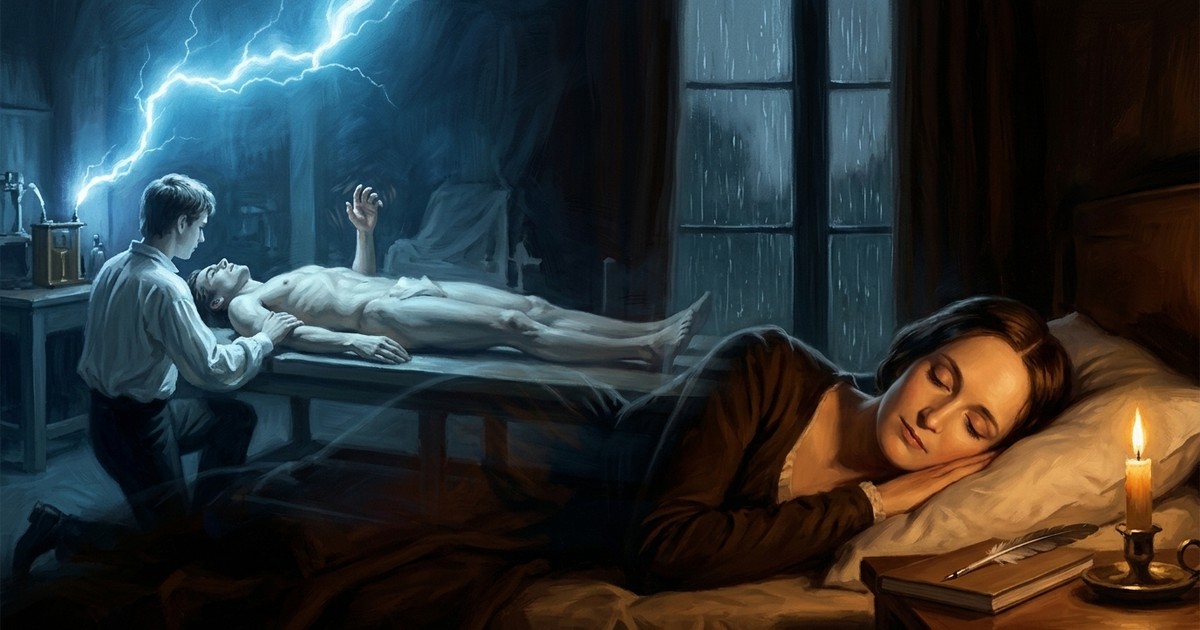
Mary Shelley Dreamed Frankenstein — Except She Wrote That She Was Not Asleep
Mary Shelley described that night herself: “I did not sleep, nor could I be said to think.” Not a dream but the threshold of sleep — and before it came days of deliberate work on an assigned problem, a late-night conversation about the principle of life, and years of a trained childhood habit of “waking dreams”. Here is the primary source, the 1831 introduction, together with where it is weak.