Dream signs: how to find your personal dream signals in 30 days

Dream signs are recurring elements that appear specifically in your dreams: people, locations, objects, situations, sensations. Each person has their own set. For one it is flying, for another a specific town from childhood, for a third an encounter with a long-departed relative. These markers are the natural 'fault lines' of dream reality — the most convenient points at which to catch lucidity.
Why they matter. MILD, reality testing, WILD — every technique works through one point: the moment when the dreamer notices that the scene is illogical. Without a personal table of dream signs you are trying to catch lucidity 'anywhere,' and the chance is extremely low. With one you are training attention on specific triggers and the chance grows by an order of magnitude.
How to find them. The only route is a dream journal kept for at least 21 consecutive days. Each morning you record content. On day 22 you re-read the accumulated entries and compile a table of recurring elements. The minimum threshold is an element appearing in 3+ dreams over the period.
Categories. Characters (often people who are no longer present in waking life — former colleagues, departed relatives, ex-partners). Places (the apartment of childhood, a particular school, an unfamiliar house that you somehow 'know'). Objects (a specific car model, a particular phone, odd clothing). Situations (running late for a flight, unable to find a door, forgetting keys). Bodily sensations (flying, swimming, weightlessness, acceleration).
An academic classification. Stephen LaBerge and Howard Rheingold, in Exploring the World of Lucid Dreaming (1990), sorted all dream signs into four types. Inner awareness: thoughts, emotions or sensations impossible in waking life, such as telepathy, strange certainty or memories that aren't yours. Action: an act by the dreamer, a character or an object that breaks physics, from levitation to walking through a wall. Form: distortion of a body, object or place, whether extra fingers, furniture that flows or a room that 'breathes.' Context: an odd combination of place, role and situation, for instance a colleague in your childhood bedroom. Sorting your entries into these four buckets shows faster which type dominates for you, and that is the one to tune your reality testing toward.
What to do with the table. Copy three or four items onto a sheet of paper and place it where you see it daily. Every time you see an item from the table in waking life, run a reality test. Additionally: at bedtime, voice a mental affirmation — 'when I see [marker] in a dream, I will recognise that I am dreaming.'
Dynamics. After 6–8 weeks the table will shift: old markers may disappear (the brain habituates), new ones surface. Refreshing the table every six weeks keeps it potent and prevents the 'blind spot' phenomenon, where even a familiar marker stops registering.
Universal dream signs that work for almost everyone. Digital text (clocks, price tags, signs), mirrors, light switches, attempts to read something twice. These items in dreams are almost always unstable and can be added to any table as a fallback.
FAQ
- What are dream signs?
- Recurring elements specific to your dreams: characters, places, objects, situations, bodily sensations. They are the natural fault lines of dream reality, the easiest points at which to catch lucidity.
- How do I find my dream signs?
- Keep a dream journal for at least 21 consecutive days, then re-read it and list elements that appeared in 3+ dreams. Refresh the table about every 6 weeks.
- Why do dream signs matter for MILD?
- Without them you are catching lucidity 'anywhere,' and the odds are very low. With a personal table you train attention on specific triggers, and the chance of recognising a dream grows by an order of magnitude.
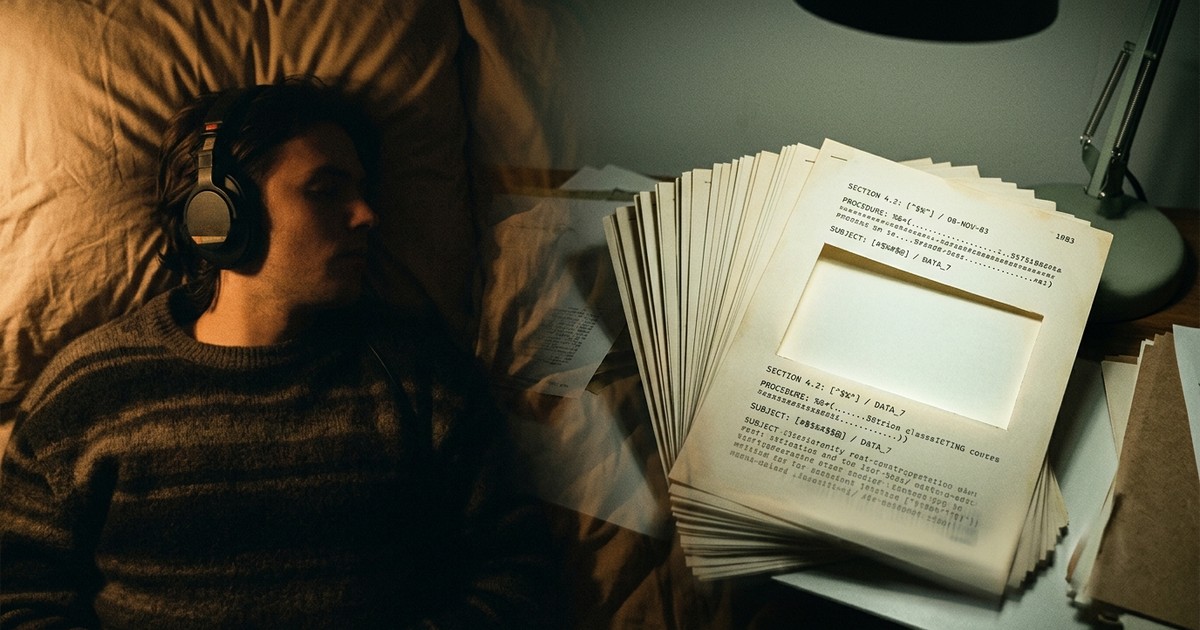
The CIA Astral Projection Report: What the Gateway Document Actually Says and What Was on the Missing Page 25
The document is real and you can download it: 29 pages, dated 9 June 1983, signed by Lieutenant Colonel Wayne McDonnell. It is not a CIA report and not a manual for astral projection — it is an Army memo assessing a commercial audio course. Here is the primary source: what it says about leaving the body, why one page was missing for eighteen years, and what turned out to be on it.
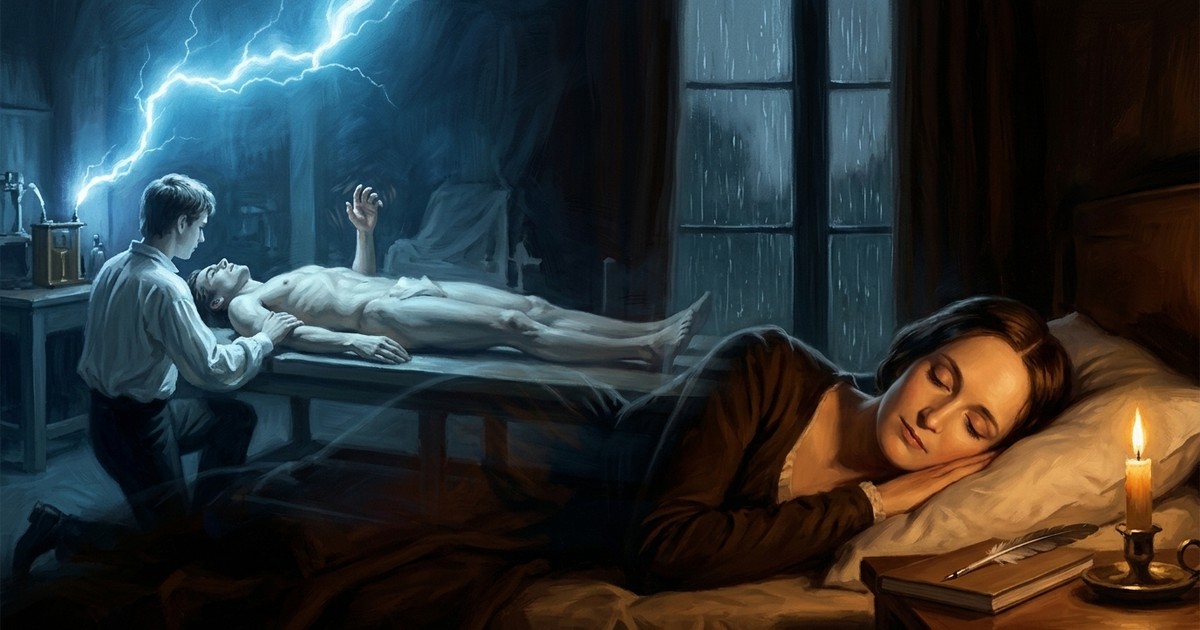
Mary Shelley Dreamed Frankenstein — Except She Wrote That She Was Not Asleep
Mary Shelley described that night herself: “I did not sleep, nor could I be said to think.” Not a dream but the threshold of sleep — and before it came days of deliberate work on an assigned problem, a late-night conversation about the principle of life, and years of a trained childhood habit of “waking dreams”. Here is the primary source, the 1831 introduction, together with where it is weak.